Mastering the Signup Page Concept: Design Strategies for Higher Conversions
Getting users to complete a signup form is one of the most critical challenges for any digital product or service. A well-designed signup page can mean the difference between a thriving user base and a stagnant one. The Signup Page Concept goes far beyond simply collecting an email address and password—it represents the first real commitment a visitor makes to your platform. When executed thoughtfully, it builds trust, reduces friction, and sets the tone for the entire user experience.
Many businesses struggle with low conversion rates on their signup forms. Visitors arrive with interest but leave without taking action. This is rarely due to a lack of desire for the service itself. More often, it stems from a poorly conceived signup flow that feels cluttered, confusing, or untrustworthy. Understanding the Signup Page Concept means recognizing that every element—from layout to typography to visual hierarchy—must work together to remove obstacles and guide the user toward a single, clear action.
Why the Signup Page Concept Matters for User Growth
Your signup page is not just a form; it is a gateway. It is where curiosity transforms into commitment. A thoughtful Signup Page Concept acknowledges that users are often hesitant. They worry about spam, data misuse, or simply wasting time on a complicated process. A well-crafted concept addresses these concerns head-on by creating a sense of safety, clarity, and value.
When you approach signup design with a user-first mindset, you begin to see the page as a conversation rather than a transaction. The visual design must communicate professionalism and reliability. This is where concepts like pixel perfect alignment and a unique and modern style become practical tools rather than aesthetic luxuries. A clean, precise layout signals that you care about details, which in turn builds user confidence.
Common Challenges with Traditional Signup Pages
Many signup pages fail because they are designed from an internal perspective rather than the user's. Common pain points include:
- Overwhelming form fields: Asking for too much information upfront creates friction and increases abandonment.
- Poor visual hierarchy: When users cannot quickly find the primary action button or understand what is required, they leave.
- Lack of trust signals: Without clear indicators of security or privacy, visitors hesitate to share personal data.
- Inconsistent branding: A signup page that looks disconnected from the rest of your site creates confusion and reduces credibility.
- Slow or unresponsive design: Users on mobile devices expect a seamless experience; a clunky form destroys motivation.
These challenges are not unique to any single industry. Whether you run a SaaS platform, an e-commerce store, a membership site, or a portfolio service, the need for a streamlined, trustworthy signup flow is universal. The Signup Page Concept offers a structured way to address each of these issues systematically.
How a Strong Signup Page Concept Addresses These Needs
A robust Signup Page Concept is built on principles of clarity, simplicity, and visual harmony. Instead of throwing every possible feature at the user, it strips away unnecessary elements and focuses on the essential journey. This is where the idea of being well organized becomes critical. A well-organized layout guides the eye naturally from headline to form fields to call-to-action button, leaving no room for confusion.
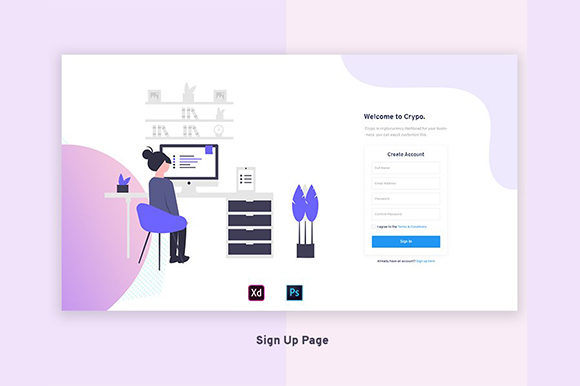
One practical application is the use of a Bootstrap 1170px grid system. This grid provides a responsive, consistent structure that works across devices. By basing your signup page on a reliable framework, you ensure that spacing, alignment, and proportions remain stable whether the user is on a desktop monitor or a smartphone. This technical foundation supports a pixel perfect outcome, meaning every element sits exactly where it should, without awkward gaps or misalignments.
Another key aspect is the visual tone. A unique and modern style does not mean flashy or distracting. It means using clean lines, thoughtful color choices, and contemporary typography that feels fresh yet professional. When paired with free fonts and free font based icons, you can achieve a polished look without expensive licensing hurdles. Icons, when used sparingly and meaningfully, can speed up comprehension—for instance, an envelope icon next to the email field or a lock icon near the password input.
Practical Applications Across Different User Groups
Different professionals will approach the Signup Page Concept with varying priorities. Understanding these perspectives helps you tailor the page for maximum effectiveness.
For UX Designers and Developers
Designers and developers often work with tools like detail layered PSDs and easily customizable Photoshop files. These resources are invaluable because they allow rapid iteration. Instead of building a signup page from scratch, a designer can start with a high-quality PSD template that already incorporates best practices. The ability to toggle layers on and off, adjust colors, and swap icons saves hours of work. For a developer, having a well organized PSD that mirrors the Bootstrap grid means the handoff from design to code is smoother. They can measure margins, paddings, and font sizes with confidence, knowing the design is already production-ready.
For this audience, the Signup Page Concept is about efficiency and precision. They value resources that are fully customizable because every project has unique branding requirements. Being able to modify a template without breaking the layout is a huge time saver.
For Business Owners and Marketers
Business owners care most about outcomes. They want a signup page that converts visitors into leads or customers. For them, the Signup Page Concept must be tied to measurable goals. They look for evidence that the design reduces abandonment and increases completed registrations. Features like unlimited portfolio variations become relevant when the signup page is part of a larger platform that showcases user work—for example, a creative community or freelance marketplace. A business owner needs the flexibility to A/B test different layouts, headlines, and call-to-action copy. Having access to multiple template variations within one cohesive concept allows rapid experimentation without starting over.
Trust is another major concern. Business owners should ensure their signup page includes after sale support touchpoints—perhaps a reassuring message after submission or a clear privacy policy link. The concept should feel designed with care, because users can sense when a page was thrown together hastily. A careful design signals that the business values its users.
For Creative Professionals and Freelancers
Freelancers and creative professionals often use signup pages to build their own client base or to onboard collaborators. For them, the Signup Page Concept needs to reflect their personal brand while still being functional. They may not have deep technical skills, so they benefit from templates that are easily customizable without requiring advanced coding knowledge. The availability of free fonts and free font based icons means they can achieve a professional look at minimal cost.
Additionally, creative professionals often work with unlimited portfolio variations. Their signup page might double as a gateway to a portfolio submission system or a client portal. The design must be flexible enough to accommodate different types of content while maintaining a consistent user experience. A unique and modern style helps them stand out in a crowded market, reinforcing their personal brand from the very first interaction.
Outcomes of a Well-Executed Signup Page Concept
When you invest in a thoughtful Signup Page Concept, the results extend beyond conversion rates. Users who have a smooth, pleasant signup experience are more likely to engage deeply with your platform. They remember the ease of joining and are more forgiving of minor issues later on. A page that feels designed with care fosters goodwill and reduces early churn.
From a practical standpoint, a signup page based on a Bootstrap 1170px grid system ensures responsiveness, which is no longer optional. With a significant portion of traffic coming from mobile devices, a non-responsive form is a conversion killer. A pixel perfect implementation across screen sizes means the page looks intentional everywhere, which directly impacts user trust.
Another outcome is reduced support overhead. When users can easily navigate the form, understand what is required, and receive clear feedback, they are less likely to encounter errors or confusion. This translates to fewer support tickets and a smoother onboarding flow. The after sale support aspect is not just about post-purchase assistance—it is about designing the page to prevent problems from occurring in the first place.
Recommendations for Implementing a Signup Page Concept
To get the most out of the Signup Page Concept, consider these actionable recommendations:
- Start with a solid template: Using a stunning PSD template that already follows best practices saves time and provides a reliable foundation. Look for templates that are well organized and based on Bootstrap 1170px grid system for maximum compatibility.
- Prioritize clarity over creativity: While a unique and modern style is valuable, never sacrifice usability for visual flair. Ensure buttons are large enough to tap on mobile, labels are visible, and error messages are helpful.
- Limit form fields to the essentials: Only ask for what you truly need at signup. Additional information can be collected later as the user becomes more invested. The fully customizable nature of a good template lets you add or remove fields easily.
- Use free resources wisely: Take advantage of free fonts and free font based icons to keep costs down while maintaining a polished appearance. Ensure the fonts you choose are legible at small sizes.
- Test with real users: Even the best template needs validation. Run usability tests to see where users hesitate or abandon the form. The unlimited portfolio variations aspect of some template sets gives you room to iterate without starting from scratch.
- Keep accessibility in mind: A truly helpful signup page works for everyone, including users with disabilities. Use proper contrast, descriptive labels, and keyboard-navigable form controls.
How Different Users Can Approach the Signup Page Concept
The beauty of a robust Signup Page Concept is its adaptability. A startup founder might prioritize speed-to-market and choose a pre-built PSD template with unlimited portfolio variations to quickly test multiple signup flows. An enterprise designer, on the other hand, might focus on pixel perfect alignment and consistency with an existing design system, using detail layered PSDs to fine-tune every spacing unit.
Agency teams often need to produce signup pages for multiple clients. For them, having access to easily customizable Photoshop files that are well organized is a game-changer. They can adapt the same core concept to different brands, saving time while delivering consistent quality. The after sale support aspect becomes crucial when clients request changes post-launch; a well-structured PSD file makes those updates painless.
For individual creators, the journey might be more personal. They need a signup page that feels authentic to their voice while still being functional. A unique and modern style helps them express their personality, and free font based icons let them add visual cues without learning a complex icon tool. The Signup Page Concept becomes a tool for self-presentation, not just a technical requirement.
Final Thoughts on Building a Better Signup Experience
The Signup Page Concept is not a one-size-fits-all solution. It is a framework for thinking about how you welcome new users into your ecosystem. By combining a strong visual foundation—rooted in pixel perfect design, a unique and modern style, and a well organized layout—with practical resources like detail layered PSDs and easily customizable Photoshop files, you can create a signup flow that feels effortless and trustworthy.
Remember that the goal is not to dazzle users with features, but to remove every barrier between them and the value you offer. When your signup page is designed with care, users notice. They feel respected, and they are far more likely to complete the process and become active participants in your platform. Whether you are a designer building for a client, a business owner optimizing for growth, or a creative launching your own project, investing in a thoughtful Signup Page Concept is one of the highest-return decisions you can make.