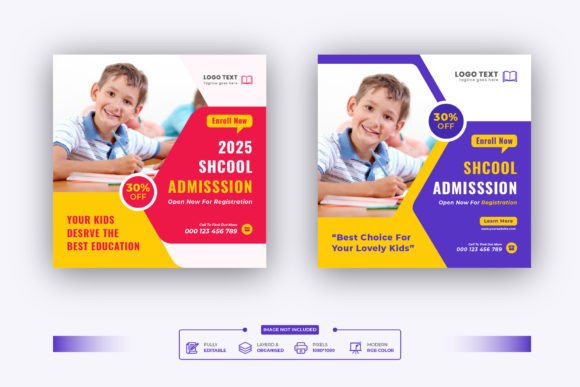
Understanding the Role of a Kids School Admission Social Media Post in Modern Enrollment Marketing
When schools and educational centers plan their annual admission drives, the conversation often turns to how they can reach modern parents effectively. For families with young children, the decision about where to enroll is layered with emotion, research, and practical concerns. In this context, a kids school admission social media post has become a central piece of the marketing toolkit. But what exactly does this format offer, and how does it compare with other ways of connecting with prospective families? This article explores the characteristics, strengths, and limitations of a kids school admission social media post so you can decide whether it fits your communication strategy.
What Makes a Kids School Admission Social Media Post Distinctive?
A kids school admission social media post is a visual or text-based update shared on platforms like Facebook, Instagram, or LinkedIn, specifically designed to attract attention to an open enrollment period at a preschool, kindergarten, or elementary program. Unlike a traditional flyer or a static webpage, this format is built for quick consumption, mobile viewing, and social sharing. The best versions combine clear calls to action, warm imagery of children learning or playing, and concise details about admission steps, age requirements, and contact information.
What sets a kids school admission social media post apart from other marketing materials is its adaptability. It can be a single image, a carousel of photos, a short video, or even a story that disappears after 24 hours. This flexibility allows schools to test different messages and see which resonates with their community. Moreover, the social media post can be promoted with targeted advertising, reaching parents based on location, age of children, or interests related to early childhood education. This targeting capability is something that print ads or general website banners cannot match with the same precision.
Another distinctive feature is the conversational tone that social media encourages. Parents can comment, ask questions, or share the post with their own networks. This turns a one-way announcement into a two-way interaction, building trust and familiarity before a family even visits the campus. For schools that want to appear approachable and community-focused, this human element is valuable.
Comparing a Kids School Admission Social Media Post with Other Marketing Approaches
When evaluating a kids school admission social media post, it helps to place it alongside other common enrollment marketing tools. Each method has its own context where it shines.
Print Flyers and Brochures
Print materials remain a staple at community events, libraries, and pediatricians’ offices. They offer a tangible presence that some parents appreciate. However, print lacks the ability to update information quickly. If an open house date changes, you cannot recall a flyer once distributed. A kids school admission social media post can be edited or reposted instantly, with corrections reaching the audience within minutes. Print also provides limited data on engagement. You may never know how many people read the flyer or took action. Social media analytics, by contrast, show impressions, clicks, and shares, giving you a clear picture of what works.
Email Newsletters
Email is a direct channel to families who have already expressed interest. It allows for longer explanations and detailed enrollment packets. Yet email inboxes are crowded, and open rates for cold outreach can be low. A kids school admission social media post serves as a discovery tool for families not yet on your mailing list. It can generate new leads who then opt into your email communications. The two channels often work best together: social media creates awareness, and email nurtures the relationship.
Website Landing Pages
A dedicated admission page on your school’s website is essential for providing deep information, such as tuition details, curriculum overviews, and application forms. But a website is mostly passive. Parents must already know to visit. A kids school admission social media post actively pulls people in by appearing in their feed at the moment they are scrolling. It serves as a bridge between casual browsing and serious consideration. The post should link directly to the landing page, creating a seamless path from curiosity to action.
Open Houses and School Tours
In-person events remain the most powerful way for families to experience a school’s culture. Nothing replaces walking into a classroom and seeing a teacher interact with students. However, open houses require significant time and staff coordination, and they typically only attract families who are already in the consideration stage. A kids school admission social media post can expand the funnel by reaching parents who are just beginning their search and might not yet be ready to attend an event. It can also serve as a reminder and a source of shareable information for those who have already visited.
Strengths and Tradeoffs of Using a Kids School Admission Social Media Post
Understanding the benefits and potential downsides of this approach helps you use it more effectively.
Strengths: One of the biggest advantages is cost efficiency. Creating a simple graphic with a photo and text can be done with basic design tools, and organic posts cost nothing except time. Even paid promotion on social media can be relatively inexpensive compared to print or broadcast advertising. Another strength is speed. A school can design and publish a kids school admission social media post in under an hour, making it ideal for urgent announcements like last-minute openings or deadline extensions. Additionally, the shareability of social media means that satisfied current parents can pass the post along to friends, effectively becoming brand ambassadors.
Tradeoffs: The main limitation is that social media posts are ephemeral. An organic post may be seen by only a small fraction of your followers due to algorithm changes, and its visibility fades quickly. Unless you boost the post or run a continuous campaign, it can be buried within hours. This means that a kids school admission social media post often requires a planned series of posts rather than a single effort. Another tradeoff is that social media tends to attract a breadth of interest rather than depth. You may get many likes or comments from people who are not actually in your geographic area or who do not have children. Careful targeting helps, but it is not perfect. Finally, the format’s brevity can be a challenge. Conveying all the essential admission details in a few lines of text and a single image requires careful editing. Important nuances about your school’s philosophy or special programs may be lost if not paired with a well-structured landing page.
When a Kids School Admission Social Media Post Is the Right Choice
This format works particularly well in several scenarios. If your school is trying to build awareness in a new neighborhood or reach families who are not already connected to your community, social media provides a low-barrier entry point. It is also a strong choice when you have visual content that captures the essence of your school—photos of children engaged in hands-on learning, artwork, outdoor play, or special events. Visual storytelling resonates deeply with parents imagining their own child in that setting.
Another ideal use case is for time-sensitive announcements. If enrollment for the upcoming school year opens next week, or if you have a few remaining spots in a popular program, a kids school admission social media post can generate quick responses. The immediacy of social media aligns with the urgency of limited availability.
Additionally, this format is effective when your primary goal is to drive traffic to a specific webpage or event registration form. By including a clear call to action and a direct link, you can measure clicks and conversions accurately. For schools with limited marketing budgets, the combination of low cost and measurable results makes social media posts an attractive starting point.
When You May Need a Different Approach
Despite its many benefits, a kids school admission social media post is not always the best primary tool. If your target audience consists of families who are less active on social media, such as those in certain demographic or age groups, you may need to prioritize email, print, or community partnerships. Similarly, if your school requires extensive explanation of a specialized curriculum or a unique educational philosophy, a single post may not provide enough depth. In that case, a well-crafted website section or a downloadable guide would be more appropriate.
Another situation where relying solely on social media posts falls short is when you need to build long-term trust over several touchpoints. Enrolling a child in school is a high-stakes decision. Many parents want to read reviews, talk to current families, observe classes, and compare multiple options over weeks or months. A social media post can initiate the relationship, but it should be part of a broader strategy that includes follow-up emails, personalized communication, and in-person encounters. Schools that put all their effort into social media without a plan for nurturing leads may see high awareness but low conversion.
Furthermore, if your school operates in a highly regulated or compliance-heavy environment, the casual and brief nature of social media can be a risk. It is easy to accidentally omit a required disclaimer or use language that could be misinterpreted. In such cases, having a formal admissions packet reviewed by legal or administrative staff may be necessary before any public messaging goes out.
Practical Considerations for Creating Your Own Kids School Admission Social Media Post
If you decide that this format suits your needs, a few practical steps can improve your results. Focus on a single clear message per post. Instead of trying to cover every detail about tuition, curriculum, hours, and immunizations in one graphic, choose one primary action you want parents to take—such as visiting your open house or filling out an inquiry form. Use a high-quality image that reflects the diversity and warmth of your school environment. Avoid generic stock photos; real moments from your classrooms build authenticity.
Keep text minimal and readable on mobile devices. Use a bold headline, a brief line of supporting text, and a button or link that stands out. Include essential details like school name, age range, and a way to contact you, but save the fuller explanation for your website. Test your post on a small sample of current parents or staff to check for clarity and tone before publishing.
Consider the timing of your posts. Weekday evenings and weekend mornings tend to be peak times for parent engagement on social media. Running a series of posts over two to three weeks around the start of your admission period can build momentum. Track performance using the platform’s analytics, and adjust your approach based on what generates the most clicks and inquiries.
Making an Informed Decision
A kids school admission social media post is a versatile and cost-effective component of a broader enrollment marketing plan. It excels at creating awareness, generating interest, and driving quick actions, especially among parents who are active online. However, it is not a standalone solution. Its strengths in speed, shareability, and targeting must be balanced against its limitations in depth, longevity, and audience reach. By understanding these tradeoffs, you can decide when a kids school admission social media post is the right tool for your school and when you need to supplement it with other methods. The most effective enrollment strategies typically integrate multiple channels, using social media posts as a starting point that leads families toward richer experiences like campus visits, conversations with teachers, and eventually, enrollment. Thoughtful planning ensures that your posts are not just seen, but that they move families one step closer to choosing your school.