Fashion Pinterest Templates: A Practical Tool for Creators, Marketers, and Small Business Owners
If you have spent any time building a presence on Pinterest, you know that visuals matter more than almost anything else. The platform rewards clean, high-resolution, well-composed pins that stand out in a crowded feed. But not everyone has the time or design skills to create polished graphics from scratch every week. That is where Fashion Pinterest Templates come in. These are pre-built, fully editable layouts designed specifically for Pinterest, and they are built to work in Adobe Photoshop and Adobe Illustrator. Whether you are a blogger planning your monthly content, a small boutique owner promoting a new collection, or a freelancer managing client accounts, these templates give you a reliable foundation to work from.
What Fashion Pinterest Templates Actually Are
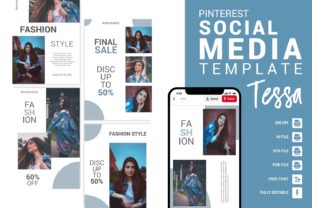
At their core, these are eight clean, professional Pinterest designs sized at 1500 x 1000 pixels. That size is important because it matches Pinterest's recommended aspect ratio for standard pins. The package includes an Adobe Photoshop file, an Adobe Illustrator file, and an EPS file, so you can work in the software you are most comfortable with. Everything is layered and organized. Colors, text, and fonts are fully editable. Images sit inside smart objects, meaning you can swap them out in seconds without messing up the rest of the layout. All the shapes are vector-based, so scaling or tweaking them won't degrade quality. The resolution is 300 DPI, which ensures your pins look crisp on any screen.
The templates themselves focus on fashion, but that does not mean they are only useful for clothing brands. Fashion in this context covers style, aesthetics, personal branding, lifestyle content, beauty, accessories, and even home decor. The layout style leans clean and creative, with plenty of room for you to inject your own personality. The fonts are free and linked inside the files, so you are not stuck with expensive typefaces. The photos you see in the preview are not included, but that is standard. You supply your own images, and the templates handle the structure.
Who Finds These Templates Useful and Why
The audience for these templates is surprisingly broad. Think about the different people who rely on Pinterest for traffic, sales, or brand visibility.
Bloggers and Content Creators
If you run a fashion blog, a style newsletter, or a YouTube channel about outfits and trends, you are probably pinning multiple times a day. Creating each pin manually is exhausting. With these templates, you can batch-produce a month's worth of pins in an afternoon. Open the Photoshop file, drop in your photos, adjust the colors to match your brand palette, and export. The layered structure means you can keep your logo, your blog name, and your call-to-action consistent across every pin. That consistency builds recognition. Over time, people start associating that clean layout with your content, and they are more likely to click.
Small Boutique Owners and Independent Retailers
Selling clothes or accessories online is competitive. Your Pinterest pins need to look as polished as your products. A small boutique owner might use these templates to showcase weekly arrivals, seasonal collections, or styling tips. Because the templates are vector-based, you can easily change background colors to match a new season or campaign. If you are launching a summer collection, shift the palette to bright pastels. For fall, go richer and darker. The flexibility means you are not locked into one look. You can evolve your visual identity without starting over each time.
Social Media Managers and Freelancers
Managing Pinterest for multiple clients means juggling different brand guidelines, color schemes, and visual styles. These templates make that easier. You can duplicate the PSD or AI file for each client, adjust the fonts and colors to match their brand, and then produce pins efficiently. The smart object feature is a time saver here. Instead of manually resizing and placing images, you double-click the smart object layer, paste your photo, and save. The template handles the rest. That kind of workflow matters when you are billing by the hour or working on tight deadlines.
Educators and Course Creators
If you teach fashion design, styling, or personal branding, you might use Pinterest to drive enrollment. These templates work well for pinning course previews, student testimonials, or content upgrades. You can adapt them to promote free downloads like lookbooks or style guides. The clean layout helps your educational content look professional, which builds trust with potential students. People are more likely to click on a pin that looks intentionally designed rather than thrown together.
Hobbyists and Everyday Users
Not everyone using Pinterest is trying to sell something. Some people just enjoy sharing their style journey, their thrift finds, or their outfit-of-the-day photos. Using a template elevates that content. It makes your boards look curated and thoughtful. If you are building a personal brand or simply want your pins to reflect your taste, these templates give you a starting point without requiring you to learn advanced design skills.
Real Scenarios Where These Templates Shine
Let me walk through a few concrete situations to show how these templates work in practice.
Scenario one: You run a small online store selling handmade jewelry. You have product photos, but they look inconsistent on Pinterest because each pin has a different background and layout. You open the Illustrator file, choose a template that fits your brand, and paste your product images into the smart objects. You change the background to a soft neutral tone. You edit the text to include the product name and a short description. Within an hour, you have eight cohesive pins ready to schedule. Your Pinterest board suddenly looks like a professional catalog.
Scenario two: You are a freelance social media manager with a client in the fashion rental space. They need pins every week showing different rental outfits. You set up the Photoshop file with their logo and brand colors. Each week, you drop new photos into the smart objects, update the text, and export. The template's consistency means you are not reinventing the layout each time. Your client gets reliable output, and you free up time to focus on strategy and analytics.
Scenario three: You are a fashion blogger preparing for a collaboration with a sustainable clothing brand. You want your pins to match the brand's aesthetic while still feeling like you. You use the EPS file to tweak the vector shapes slightly, maybe changing the border style or adjusting the placement of text. Because everything is vector-based, those changes are precise and clean. The collaboration goes live, and the pins perform well because they look intentional and aligned with both brands.
What to Consider Before Using These Templates
While these templates are powerful, getting the most out of them requires a little preparation. First, you need basic familiarity with Adobe Photoshop or Illustrator. You do not need to be a designer, but you should know how to open a layered file, use smart objects, and edit text layers. If you are comfortable with those basics, you will have no trouble.
Second, remember that the photos are not included. That is standard, but it means you need your own image library. Whether you shoot your own photos, use stock images, or source from free image sites, having high-quality visuals is essential. The template structures the pin, but the photo is what grabs attention.
Third, the files are zipped, so you need software like WinZip or WinRAR to unzip them. That is a small step, but it is worth noting if you are working on a device that does not have unzipping software pre-installed.
Fourth, think about brand consistency before you start editing. Decide on your color palette, your fonts, and your logo placement ahead of time. Having a style guide, even a simple one, helps you use these templates consistently across all your pins. That consistency is what turns a single pin into a recognizable brand asset.
Finally, consider your pin strategy. Templates make it easy to produce a lot of pins quickly, but volume alone is not enough. Each pin should have a clear purpose. Are you driving traffic to a blog post? Promoting a product? Building an email list? Tailor the text and imagery to that goal. The template gives you the container, but you fill it with intentional content.
How Different Users Benefit in Practice
For a blogger, the benefit is time saved and a more professional look without hiring a designer. For a boutique owner, the benefit is brand consistency across seasonal campaigns. For a freelancer, the benefit is scalability and the ability to serve multiple clients without starting from zero each time. For an educator, the benefit is credibility. For a hobbyist, the benefit is the satisfaction of seeing your personal boards look curated and polished.
The templates also help with experimentation. Because everything is editable, you can try different color schemes, fonts, and layouts without committing. If a pin underperforms, you tweak the colors and test again. The layered structure makes A/B testing practical at a small scale. You can produce two variations of the same pin in minutes, pin both, and see which resonates more with your audience.
Final Thoughts on Using Fashion Pinterest Templates
These templates are a solid investment for anyone who takes Pinterest seriously. They remove the repetitive parts of pin creation and let you focus on the content that matters. You still need good photos, a clear message, and a strategy for what you are pinning and why. But the design foundation is taken care of. That is valuable for busy creators, entrepreneurs, and marketers who do not have the luxury of spending hours on each pin.
The fact that the files work in both Photoshop and Illustrator gives you flexibility. The vector shapes mean you are not limited to the original layout. The smart objects make image swapping fast. The 300 DPI resolution ensures your pins look sharp on retina screens and mobile devices. If you are already using Pinterest to grow your audience or your business, these templates can become a reliable part of your workflow.
Download them, unzip the folder, open the file in your preferred software, and start customizing. Your first pin might take a little time as you learn the layers. By the third or fourth pin, you will move quickly. That speed, combined with the professional result, is what makes these templates genuinely useful in real, everyday situations.